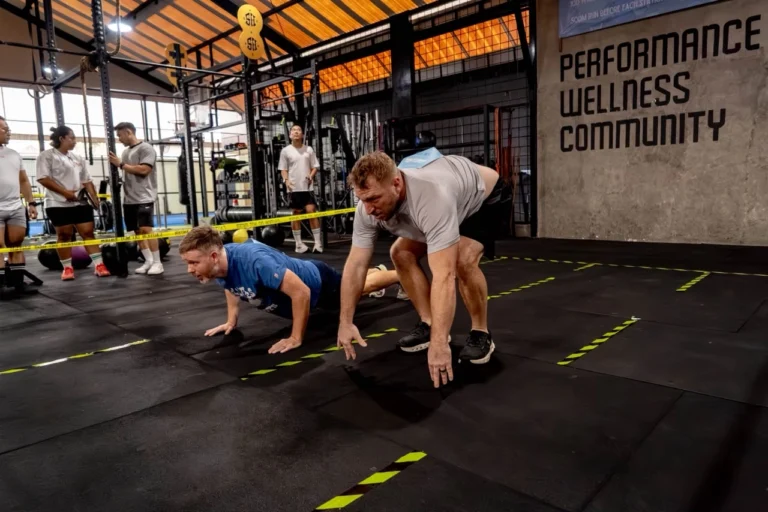
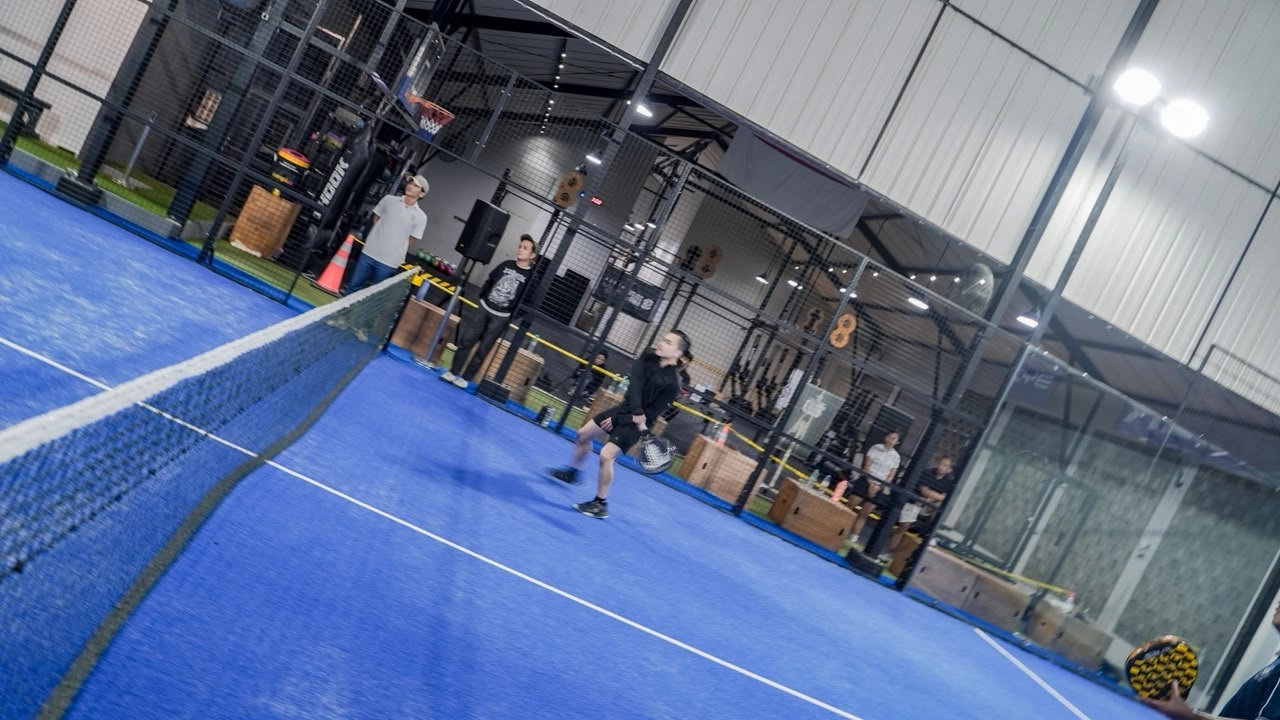
South Barn Reserve’s private court sits inside a working strength gym. That changes the game more than you’d think.
Padel has taken Kemang the way few sports ever take a neighborhood. In the space of about two years the area has become one of the densest, liveliest padel scenes in the city, more than a dozen courts now across half a dozen venues, each with its own character, and more on the way. There are courts built to world-tour standard, courts with spas and saunas attached, one twenty-six floors up with the skyline for a backdrop. It’s a genuinely great time to pick up a racket here. The sport is spoiled for choice, and the choice keeps getting better
South Barn Reserve is part of that boom, and glad to be. But it offers one thing you won’t find anywhere else in the neighborhood, and you hear it before you see it.
The court here is a full international-standard court, the same 20-by-10-meter dimensions you’d play on at any tournament, and it sits inside a working strength gym. Same steel roof, same warehouse lights, same open air as the rigs, the platforms, and the heavy bag in the corner. Look through the black mesh mid-rally and you’ll see wall balls stacked on the floor, a basketball hoop overhead, plyo boxes with people sitting on them courtside, and off to the side, someone driving a loaded barbell into the ground hard enough that you feel the thud land in your chest between points.
It wasn’t engineered as a feature. It’s just what happens when you put a padel court inside a real gym instead of a room of its own. And it turns out to be the thing people remember. The players who keep coming back tend to fall into three kinds.
There are the ones who come for the privacy. The single court is theirs for the session, no rotating strangers, no foursome waiting on the bench, just their game and whoever they brought. In a sport that’s become a scene, a court that’s genuinely yours is its own quiet luxury.
There are the ones who come for the energy. They love that the game sits inside something alive, a metcon going off ten meters away, someone counting reps, a plate rack rattling, the low industrial hum of a gym in full swing. It makes the session feel less like a booking and more like a place. They wouldn’t trade that soundtrack for silence.
And there are the ones who simply wander in, because it’s Kemang and padel is everywhere and this court is right here, the way four others are right here. They came to try it the way they’ll happily try the next one. Except some of them notice, halfway through the first game, that this one feels different, and they come back on purpose.
What all three tend to share is a moment where they stop looking at the net and start looking through the fence, at the floor beyond it, where the sport they’re playing quietly meets the reason they’d play it better.
Because padel is one of the most physically demanding games disguised as an easy one. Simple to pick up, generous to beginners, and quietly brutal on the parts of the body that rarely get asked to work anywhere else. It’s explosive: the smash overhead, the lunge into the corner, the sudden reversal when the ball comes off the glass behind you. It’s deeply rotational, spine and hips torquing through every swing, every wall play, every recovery. It’s single-leg-loaded, one ankle absorbing the full stop while the other has already changed direction. And underneath all of it, it’s stop-start conditioning of the most honest kind, the sort that finds the exact edge of your engine and parks there, until the third game arrives and your legs start filing complaints your lungs already sent.
Everything padel exposes, the floor on the other side of that fence is built to fix. The stronger hips and glutes that keep the knee tracking true instead of caving on a hard lunge. The controlled mobility that lets you rotate powerfully through the trunk without borrowing it from your lower back. The single-leg stability that turns a desperate stretch for the glass into a balanced, repeatable movement. The aerobic base that keeps your footwork sharp and your decisions clean deep into a match. And the resilience, built slowly under load, that lets you play three times a week without your knees, shoulders, and elbows staging a protest by Friday
None of that is built on the court. It’s built off it, in exactly the kind of strength and conditioning work happening on the other side of the fence while you play. Most padel players never see the connection, because in most places the two worlds are kept apart. At Reserve they share the same floor, the same air, the same sightline. You can watch the answer to your own game being lifted, pressed, and carried ten meters away.
A dozen courts in Kemang, and counting, and it’s a wonderful thing for the sport. Reserve simply offers one where the barbell is part of the experience, not banished from it. By the second or third booking, the players who keep coming back have usually stopped hearing that sound as background. They’ve started hearing it as an invitation.
The private single court at South Barn Reserve books through Courtside. The strength floor on the other side of the fence is South Barn’s, and it’s closer than it looks.